 EN
EN
What UL 2849 Means When Sourcing E-Bike Battery Systems
2026/10/15
Learn what UL 2849 means for lithium ion e bike battery sourcing, system scope, supplier documents, and configuration checks.
2026/10/14

Selecting the optimal battery pack is one of the most consequential decisions for e-bike OEMs, component integrators, and fleet solution providers. With lithium-ion chemistries evolving rapidly—and safety, longevity, and regulatory compliance becoming non-negotiable—technical buyers need a spec-driven framework, not just marketing claims. This guide cuts through ambiguity by mapping battery selection criteria to real-world application requirements: from urban commuter fleets demanding 1,500+ cycles to premium off-road models requiring thermal resilience at -20°C. We break down voltage architecture trade-offs, chemistry performance envelopes, and critical OEM integration factors—including BMS communication protocols (CAN bus vs UART), mechanical mounting constraints, and UN38.3/IEC62133 certification readiness. Whether you’re scaling production or qualifying second-source suppliers, this guide delivers actionable benchmarks grounded in industry-validated test data and field deployment experience.
Battery performance cannot be reduced to a single metric like 'Ah' or 'Wh'. Instead, it emerges from the interplay of five interdependent parameters: nominal voltage, usable capacity (kWh), energy density (Wh/kg), cycle life under partial-state-of-charge (PSOC) conditions, and thermal management efficacy. For example, a 48V/14Ah NMC pack may offer higher peak power than a same-size LFP unit—but its accelerated degradation above 35°C makes it unsuitable for southern European delivery e-bikes operating 10+ hours daily. Likewise, voltage selection directly impacts motor controller compatibility, regenerative braking efficiency, and wiring gauge requirements—factors that cascade into BOM cost and assembly time.
Lithium Nickel Manganese Cobalt Oxide (NMC) and Lithium Iron Phosphate (LFP) dominate the e-bike battery market—but they serve fundamentally different use cases. NMC excels in high-energy-density applications where weight and compactness are prioritized (e.g., lightweight folding e-bikes or racing prototypes), while LFP leads in safety-critical, high-cycle-count deployments such as shared mobility fleets and cargo e-bikes with daily 80–100 km duty cycles. Crucially, LFP’s flat voltage curve simplifies state-of-charge (SoC) estimation but demands precise cell balancing; NMC’s steeper discharge curve enables simpler BMS algorithms but increases risk of over-discharge if protection thresholds aren’t calibrated per-cell.
The table below compares key technical dimensions across battery chemistries and voltage platforms—designed specifically for B2B engineering and procurement teams evaluating supplier proposals or internal design specs.
| Selection Criterion | NMC (LiNiMnCoO₂) | LFP (LiFePO₄) |
|---|---|---|
| Voltage Platform Suitability | Ideal for 36V & 48V; limited headroom at 52V due to 4.2V/cell max | Optimized for 48V & 52V (3.65V/cell); stable up to 54.6V nominal |
| Cycle Life (80% DoD) | 800–1,200 cycles (degrades faster >35°C) | 2,000–3,500 cycles (minimal degradation <45°C) |
| Thermal Management Needs | Active cooling strongly recommended above 25°C ambient | Passive cooling sufficient up to 45°C; no thermal runaway below 270°C |
| OEM Integration Requirements | Requires CAN FD or high-speed UART for dynamic SoH monitoring | Compatible with legacy UART; supports OTA firmware updates via BLE + CAN |
| Safety Certification Readiness | UN38.3 pass achievable; IEC62133-2:2024 requires enhanced venting design | Inherently compliant with UL 2271, EN15194 Annex D, and GB/T 36972–2018 |
Choosing the right e-bike battery pack is less about chasing headline specs—and more about aligning electrochemical behavior, thermal response, and digital integration capabilities with your specific vehicle architecture and operational profile. As global regulations tighten (e.g., EU Battery Regulation 2023/1542 mandating carbon footprint declarations by 2027), forward-looking OEMs are shifting from ‘cost-per-Wh’ to ‘total lifecycle value per cycle’. By applying this technical framework—grounded in chemistry fundamentals, voltage-system implications, and real-world integration constraints—you’ll reduce qualification timelines, minimize warranty exposure, and future-proof your e-bike platform against evolving safety and sustainability mandates. Ready to benchmark your next battery specification? Contact our engineering team for a free compatibility assessment and UN38.3 pre-test consultation.
2026/10/15
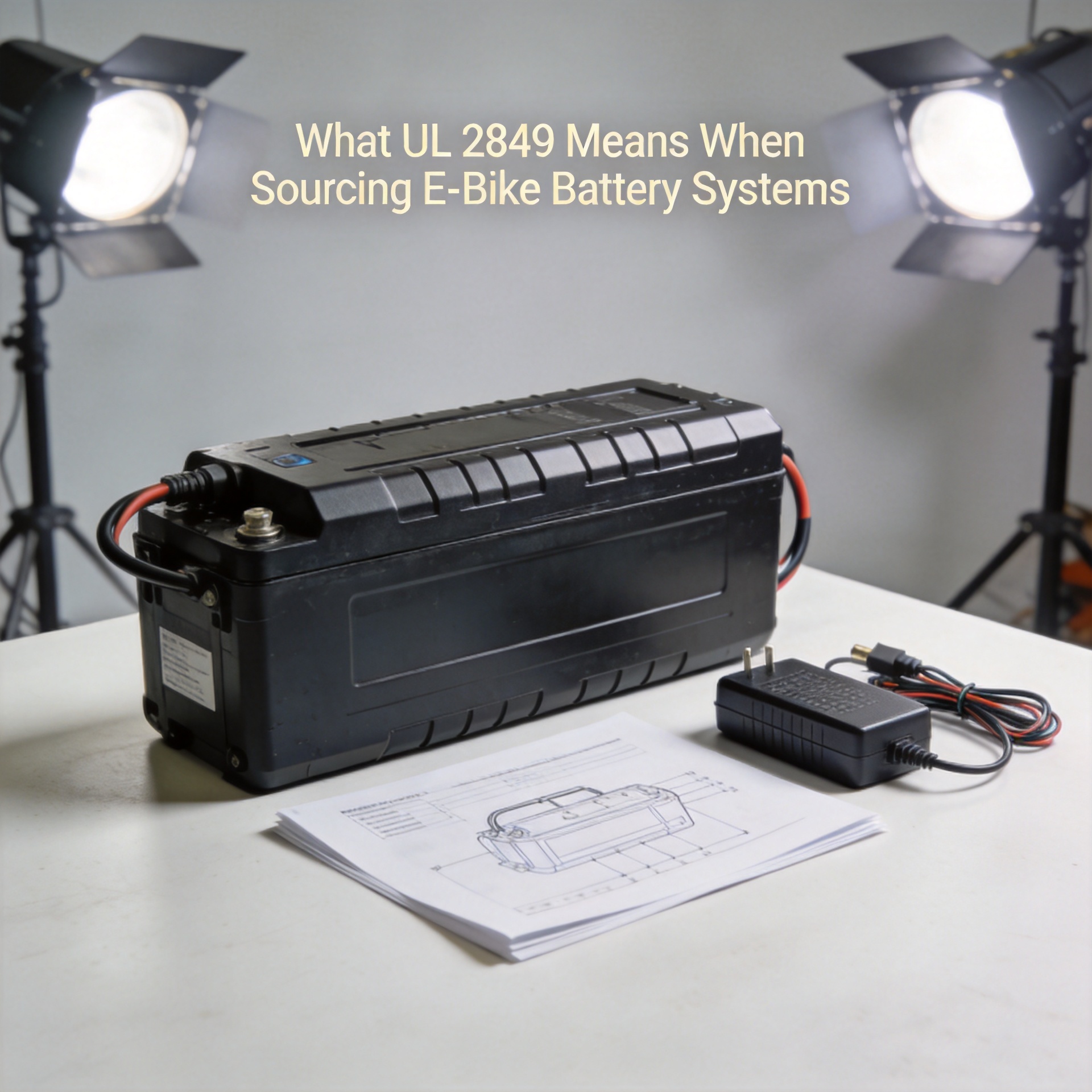
Learn what UL 2849 means for lithium ion e bike battery sourcing, system scope, supplier documents, and configuration checks.
2026/10/15
See how OTA updates help e bikes fleets manage versions, diagnose issues remotely, and deliver more consistent product support.
2026/10/15
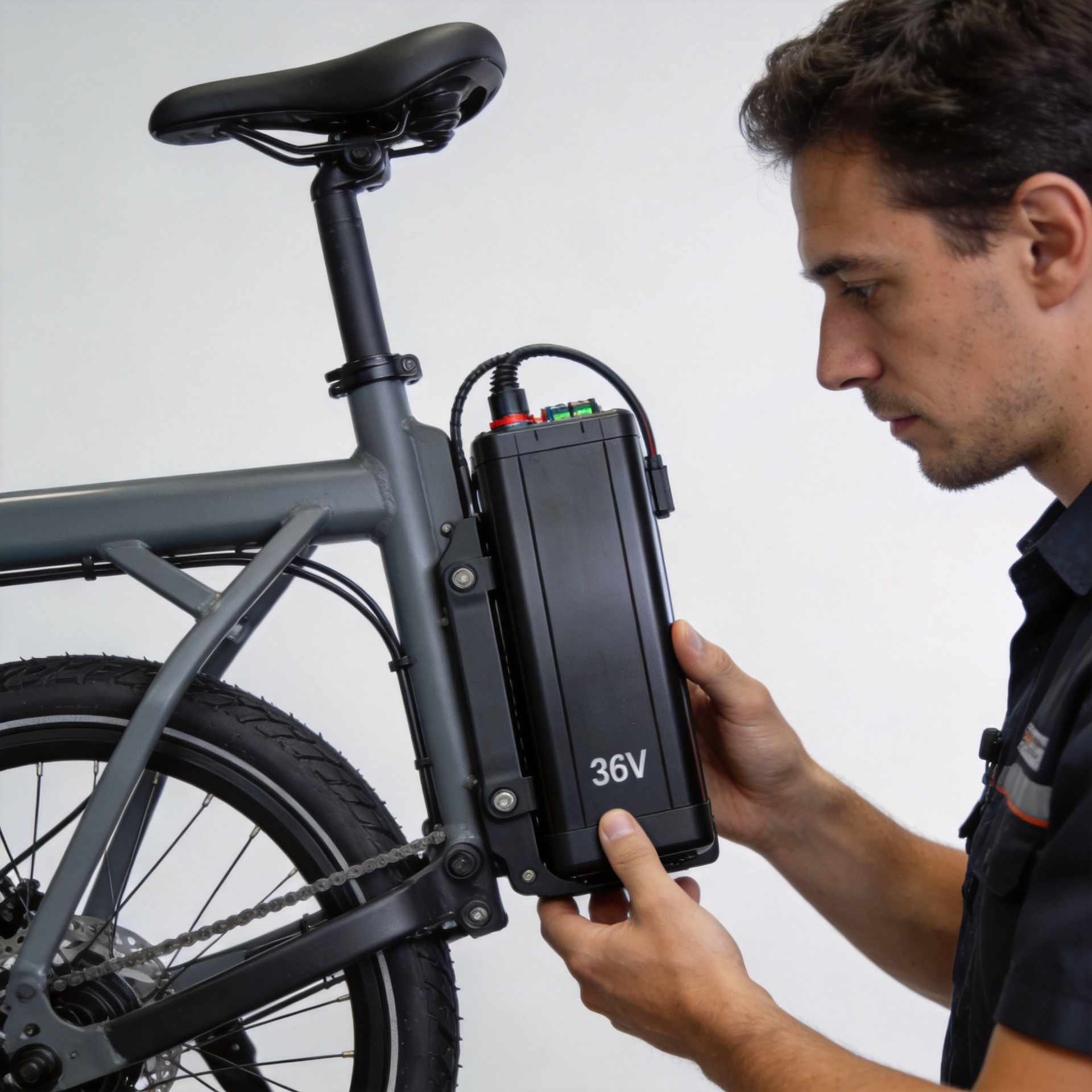
Choose a 36v lithium battery for electric bikes with this OEM and replacement checklist for voltage, fit, BMS, and safety.
2026/10/15
Estimate e bike 36v range with a clear Wh formula, practical examples, and the riding factors that change real-world distance.

2026/10/14
Actionable maintenance practices for distributors and fleet operators to maximize motor reliability and reduce warranty claims.

We offer comprehensive solutions for electric bicycle manufacturing, focusing on customized design, sample development, quality production, and global logistics service. Our technical team ensures efficient communication and continuous support throughout every stage, delivering reliability that helps brands thrive in international markets.
Discover more articles and guides relevant to electric bicycle innovation, manufacturing trends, and applications.

Explore how new battery technologies are enhancing performance and reliability for electric bicycles, supporting efficient urban mobility and sustainable transport.

Discover the latest trends in smart accessories for electric bicycles, including advanced displays, digital locks, and connectivity features tailored for brand owners.

Get insights into high-quality production processes for electric bicycle parts, ensuring durability and precision for demanding international markets.
