EN
EN

How to Choose a 36V E-Bike Battery for OEM and Replacement Projects
For a brand buyer, service network, or repair channel, choosing a 36v lithium battery for electric bikes is not a matter of matching the voltage printed on the label. A replacement pack can be nominally 36V and still be unsuitable because its charge profile, BMS limits, connector pinout, mounting geometry, or controller communication differs from the host bike. The practical task is to establish compatibility in a repeatable order before a purchase order or retrofit program moves forward.
This guide is written for OEM and replacement projects where one wrong assumption can create rework across purchasing, assembly, and after-sales teams. The key principle is simple: first verify the bike’s electrical architecture, then the pack’s usable energy and discharge capability, and finally the physical and documentation requirements. That sequence makes it easier to compare a battery e bike 36v option without treating a similar-looking case as proof of interchangeability.
Start With the 36V Electrical Baseline
A 36V lithium-ion e-bike pack is usually described by its nominal voltage. In a typical 10-series lithium-ion configuration, a fully charged pack reaches about 42V. This is why voltage matching must include the charger and controller, not only the nominal rating on the battery case. Before selecting a 36v lithium battery for electric bikes program, collect the controller’s permitted voltage range, the original charger output, the battery’s maximum charge voltage, and the low-voltage cut-off behavior.
Do not assume that a 36V label establishes universal compatibility. A charger intended for a different chemistry or charge profile can damage a pack or cause a BMS to stop charging. Likewise, a controller may have limits that are compatible with a nominal 36V system but not with an unexpected voltage profile. For an OEM project, record the values in a shared specification sheet; for a replacement program, confirm them against the bike’s original documentation and a sample unit.
Compare Watt-Hours, Not Amp-Hours Alone
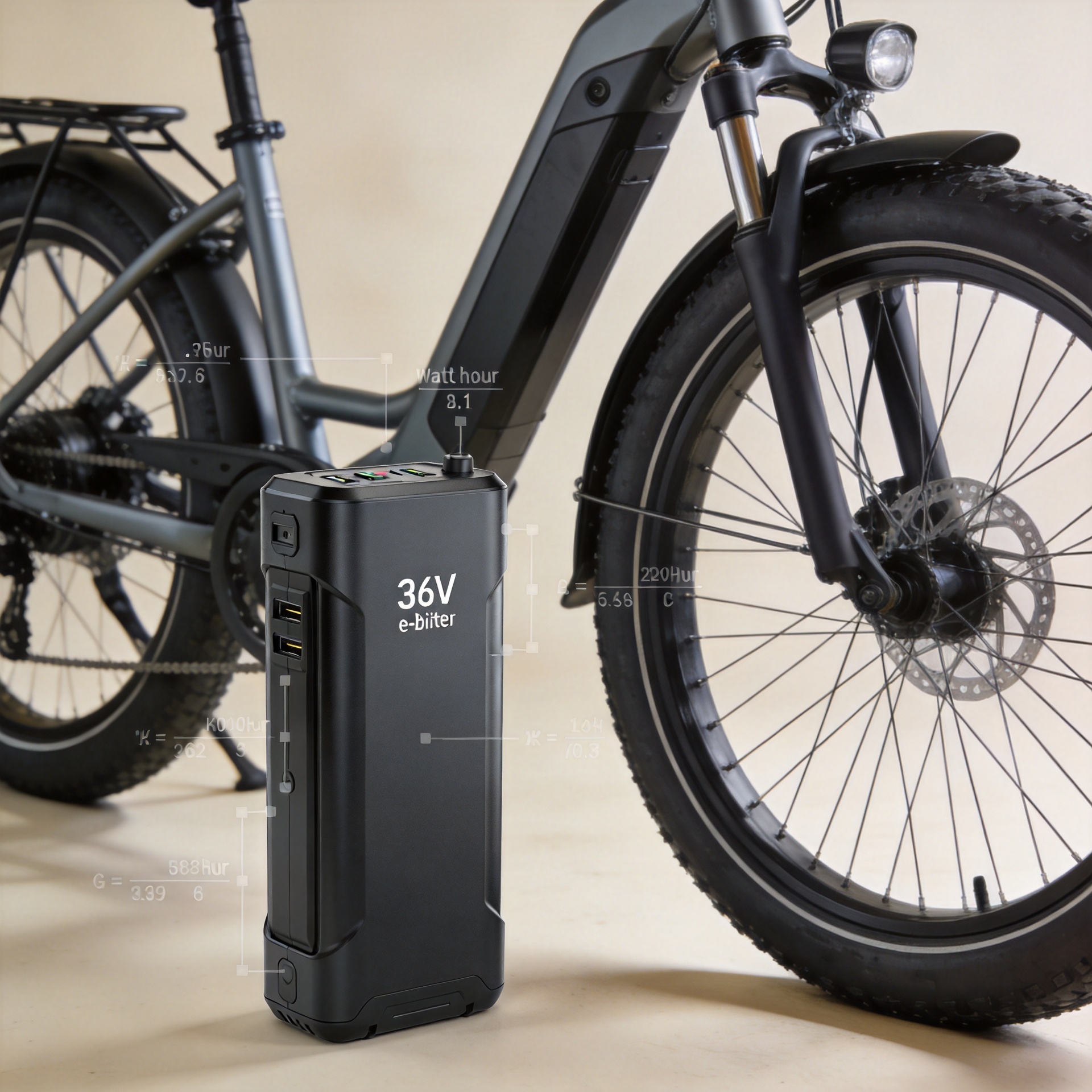
Capacity in amp-hours is useful, but it does not tell the whole story. Compare energy in watt-hours using the basic relationship: nominal voltage × amp-hours. For example, a 36V 10.4Ah pack is approximately 374Wh. That is why an ebike battery 36v 10ah description should be treated as the start of a comparison, not the conclusion. Two packs with similar amp-hour labels may differ in cell configuration, voltage class, or usable energy.
For a B2B replacement program, define the required energy window from the host bike’s intended use, expected range positioning, vehicle weight, rider load assumptions, and acceptable recharge pattern. Then check the continuous and peak discharge requirements of the motor-controller combination. The BMS must support the project’s actual current demand; a pack chosen solely for its stated capacity can become a weak point if its discharge limit is too low.
One relevant on-site reference is the EcoCell-360 Pro Lithium-Ion Ebike Battery, 36V 10.4Ah, 374Wh. Use the published 36V, 10.4Ah, and 374Wh information as a starting point for an energy comparison, then obtain the current, connector, mounting, and integration records required for the specific bike program.
Verify Connector, Controller, and BMS Compatibility
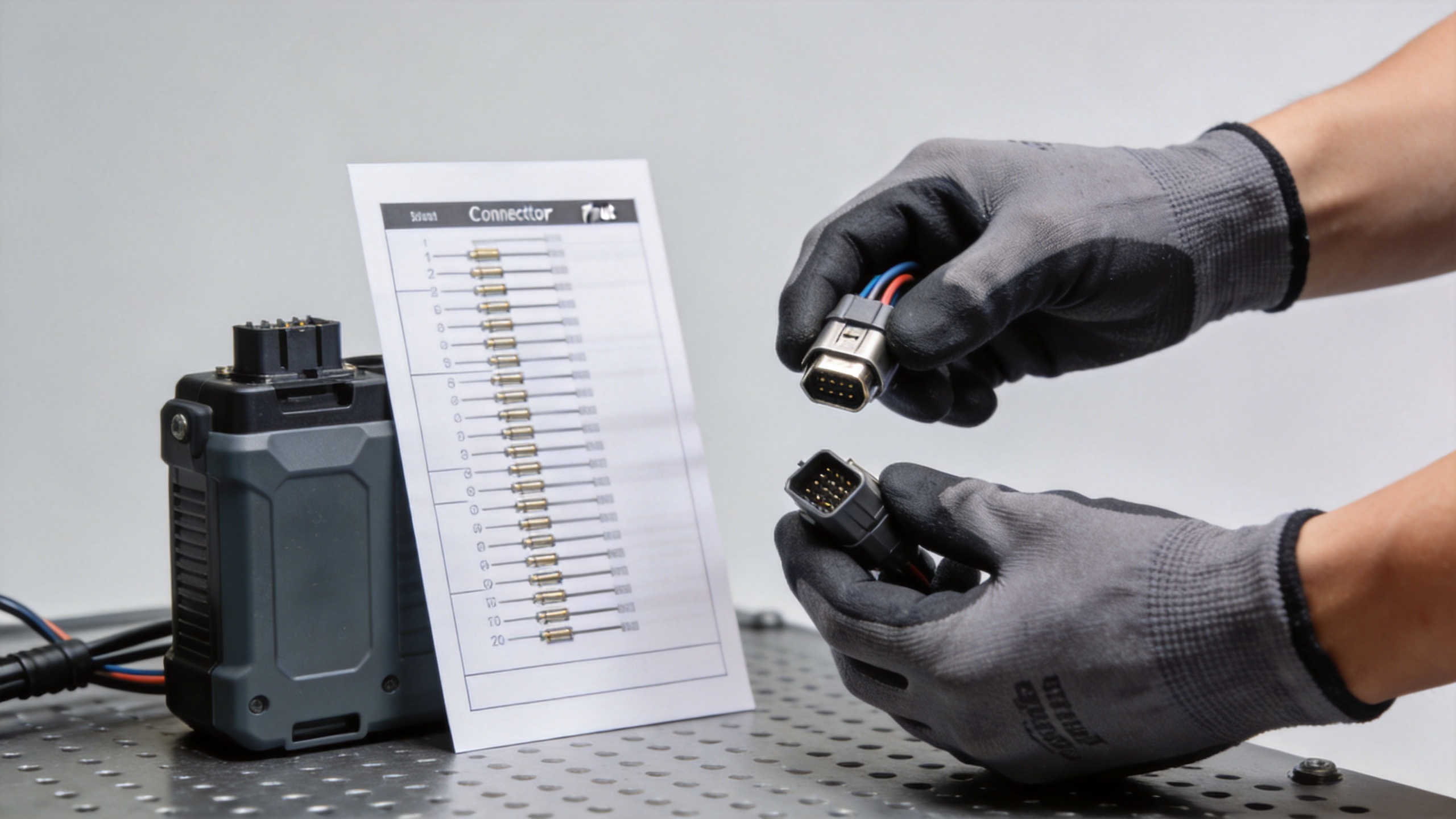
This is the step that prevents the most expensive errors. A 36v lithium battery for electric bikes may use the same nominal voltage as the original unit while having a different charge connector, discharge connector, pin order, fuse arrangement, key switch, data pin, or communication protocol. Photographing a connector helps, but it is not enough. Request a pinout drawing, polarity confirmation, cable gauge, and connector current rating.
- Discharge path: confirm connector family, pinout, polarity, current rating, and any wake-up or ignition wire.
- Charge path: confirm connector, charger output, charge-current limit, and BMS charging behavior.
- Controller relationship: confirm nominal voltage, permitted high voltage, current demand, and communication requirements if the bike uses them.
- BMS behavior: verify over-current, over-charge, low-temperature, and fault-protection behavior against the intended system.
For a battery e bike 36v replacement, do not modify connectors merely to make the parts mate unless a qualified engineering review covers electrical ratings, polarity, sealing, strain relief, and service implications. A connector adapter can hide a mismatch rather than solve one.
Check Mechanical Fit and Environmental Protection
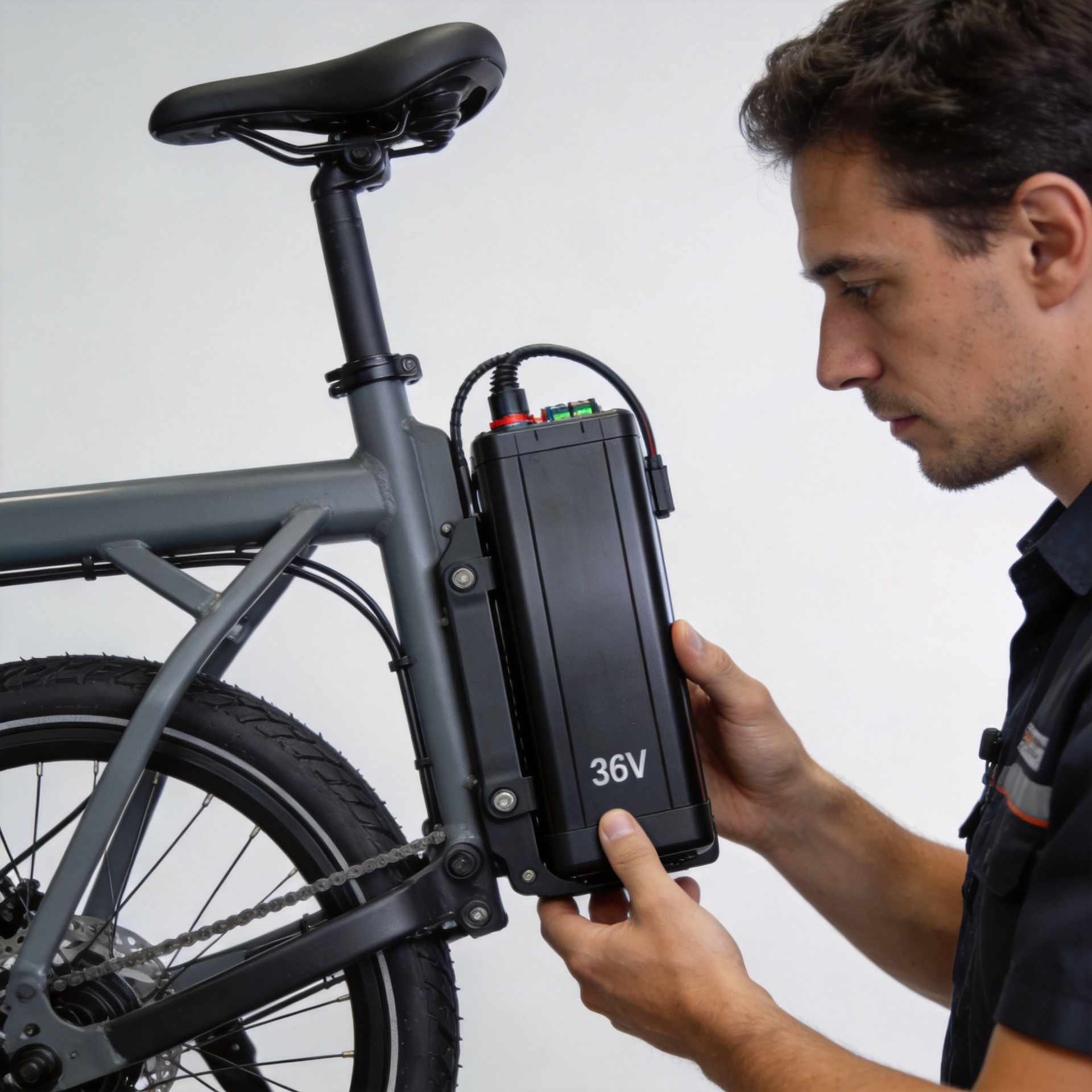
Electrical compatibility does not guarantee a usable replacement. Confirm enclosure dimensions, rail or cradle geometry, locking mechanism, key position, cable exit direction, clearance to the frame, and the effect of the pack’s center of gravity. In a service network, these checks should be done on the actual bike version rather than on a generic product image.
Also define the environmental exposure the project needs to withstand. An IP rating, if provided, is meaningful only when the test scope and final installation conditions are understood. Ask how the battery-to-frame interface, charging port cover, cable entry, and mounting points behave in the intended application. For European and African market projects, keep market-specific requirements as items to verify rather than treating one region’s expectations as universal.
Review Safety Documentation as a System Question
Battery documentation should support a system-level discussion. For example, UL 2849 evaluates the electrical system of an e-bike, including the battery, charger, motor, and wiring combinations. It should not be read as a blanket statement that any separately sourced 36V battery will fit every bike. When a supplier provides a certification claim, request the applicable report, model reference, scope, and relationship to the final bike configuration.
For each 36v lithium battery for electric bikes candidate, create a document pack that includes the data sheet, cell and BMS information where available, charger specification, wiring or pinout drawing, test evidence relevant to the project, labeling artwork, transport documentation, and revision control. This makes incoming inspection and future replacement support far easier.
Use a Sample Validation Plan Before Scaling
Past experience in sourcing often starts with unit price, then moves to fit questions after samples arrive. A more reliable approach is to validate the critical interfaces first: voltage behavior, charging sequence, controller operation, fit on the intended frame, lock engagement, cable routing, and fault response. If the bike and battery versions are already confirmed, that comparison becomes meaningful; without those inputs, a compatibility statement should remain conditional.
- Freeze the host-bike version and collect original battery, charger, and controller specifications.
- Compare candidate pack drawings and electrical limits line by line.
- Run a controlled sample fit and charge/discharge check on the target bike.
- Record acceptance criteria for connectors, dimensions, labeling, protection, and functional operation.
- Approve a revision-controlled bill of materials before production or broad replacement rollout.
This checklist is especially useful when selecting an ebike battery 36v 10ah option for a project with several bike variants. It converts a vague “36V replacement” request into an auditable decision.
Final OEM and Replacement Battery Checklist
Choose a 36v lithium battery for electric bikes only after the project can answer these questions: Does the charger match the pack’s charge voltage and chemistry? Does the controller accept the full voltage range? Can the BMS support the required current? Are the discharge and charge interfaces electrically and mechanically correct? Does the enclosure fit and lock on the exact bike version? Is the required documentation traceable to the final configuration? Has a representative sample passed the agreed checks?
For OEM teams and repair channels, the appropriate battery is not simply the pack with the largest printed capacity. It is the documented, validated option that matches the bike’s electrical system, physical mounting, service process, and target-market requirements. Build that verification sequence into the sourcing workflow, and a battery e bike 36v decision becomes easier to repeat across future models and replacement cycles.