EN
EN


How OTA Updates Improve E-Bike Fleet Maintenance and Product Support
For connected e bikes, maintenance is no longer limited to the moment a vehicle reaches a workshop. A well-designed over-the-air (OTA) process lets a fleet team deliver approved software or firmware changes remotely, keep an auditable record of versions, and give support staff a clearer starting point when an issue is reported. It does not replace mechanical inspection, battery checks, or safe workshop procedures. Instead, it makes the digital layer of a fleet easier to manage. For connected e bikes, that shared digital record can be as important to support triage as a service log.
This matters when a brand, shared-mobility operator, delivery fleet, or dealer network supports many e bikes in daily service across different locations. If a controller setting, display behavior, communication module, or mobile-app integration needs an update, asking every rider to visit a service point may create delay and inconsistent outcomes. OTA updates create a controlled alternative: identify eligible vehicles, validate the update, deploy it in stages, and retain the result for later support.
What an OTA Update Means for E-Bike Fleets
An OTA update is the remote delivery of approved software or firmware to a connected device. In a fleet of e bikes, the update-capable device could be a telematics unit, display, controller gateway, battery-management interface, or communication module, depending on the vehicle architecture. OTA and remote diagnostics are related but not identical. Diagnostics help a support team understand device state or fault information; OTA provides a managed way to distribute a corrective or improved software package. This gives fleet operators a repeatable way to manage compatible e bikes rather than relying on ad hoc instructions.
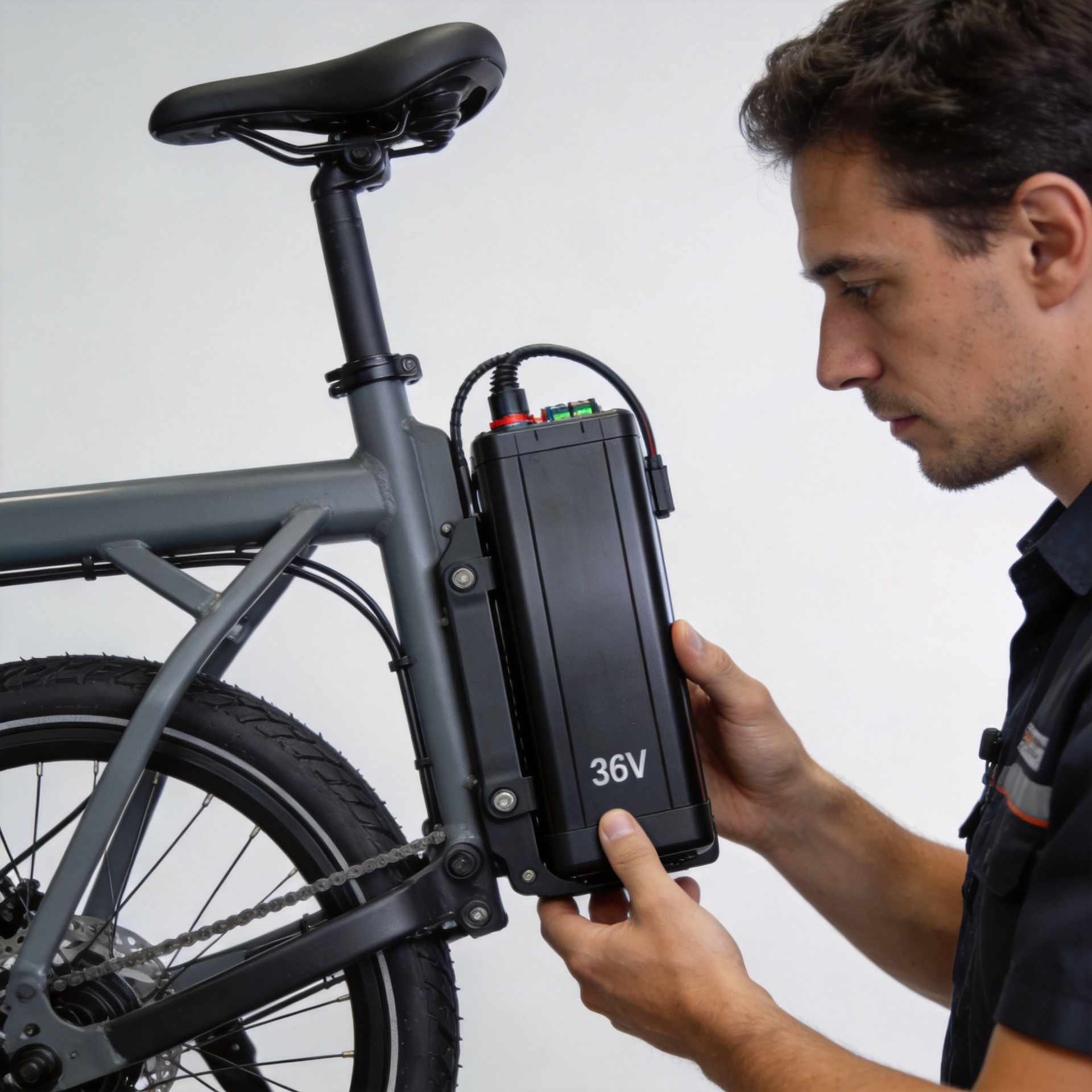
For a 36v electric assist platform, the voltage label alone does not indicate whether remote updating is possible. The practical question is whether the vehicle has a supported connected module, a reliable power-state policy, a compatible firmware architecture, and a secure update path. Before making an update plan, teams should confirm the vehicle model, hardware revision, module interface, and the component that is actually eligible for remote programming. The same check should be repeated for every vehicle group: connected e bikes can share a brand name while still carrying different hardware revisions.
Why Version Visibility Changes Maintenance Work
Without a version record, two e bikes that look identical may behave differently after a repair or replacement because their digital configurations differ. OTA management gives a fleet a version map: which vehicles are on the approved release, which are pending, which failed installation, and which need a workshop follow-up. That map helps support teams avoid treating every report as an entirely new case.
A useful workflow begins with a small set of questions: What component is affected? Which hardware revisions are eligible? What software version is installed? Is the vehicle safely parked, sufficiently powered, and connected? The point is not to promise that every issue is software-related. A recurring mistake is to attribute a maintenance problem to one part before checking the surrounding system. Remote data can narrow the next step, while a physical inspection remains necessary whenever safety, wiring, mechanical wear, or battery condition is in question. That boundary helps a team use OTA for the right e bikes cases rather than forcing a remote solution onto a physical fault.
How OTA Improves Product Support
Product support becomes more consistent when the team can discuss a known configuration rather than rely only on a rider’s description. For example, a support agent can first confirm the vehicle’s reported version and update status, then determine whether the case needs a software action, a configuration review, or an in-person service visit. This sequence can reduce repeated questions and makes the handoff between customer service, technical support, and dealers easier to document.
Connected e bikes may use a cellular gateway to exchange status information and receive approved packages. Where a compatible architecture is required, a product such as the E-BikeCom 5G LTE Module can be evaluated as part of the connectivity layer. Its suitability still depends on the fleet’s vehicle design, interfaces, integration plan, and verification process; a component name alone is not proof of fit.
A Safer OTA Rollout Starts Small
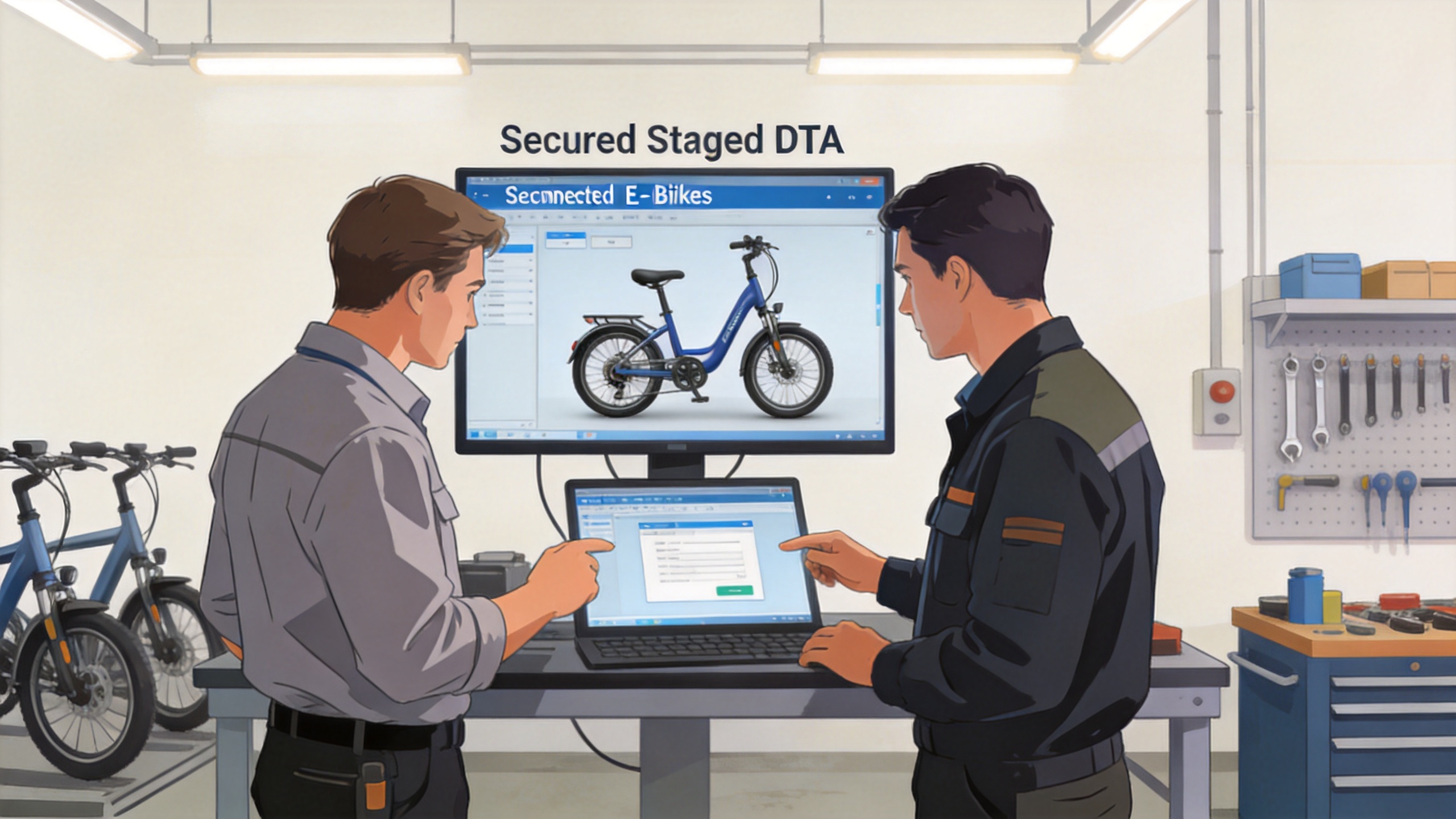
The most reliable approach is usually staged deployment, not a single fleet-wide push. Start with a representative pilot group, define success and stop conditions, and review the results before expanding. A basic rollout plan should include:
- Package control: identify the approved release, the affected component, and the eligible hardware versions.
- Identity and integrity checks: authenticate devices and verify that the package received is the intended package.
- Vehicle-state rules: set conditions for connectivity, power, and a safe update window so normal use is not interrupted unexpectedly.
- Fallback planning: define what happens if an installation is incomplete, including how a dealer or technician will recover the vehicle.
- Outcome records: retain the update result, version, timestamp, and any follow-up action for each vehicle.
Secure OTA guidance commonly emphasizes a protected channel between the vehicle and the software distribution system. For fleet teams, that principle translates into practical controls: approve packages before release, restrict who can initiate deployments, log results, and avoid assuming that a network connection alone makes an update safe. These controls are especially useful when a fleet includes e bikes operating across more than one dealer or service location.
Where OTA Fits—and Where It Does Not
OTA is most useful for repeatable digital changes: correcting a known firmware issue, aligning compatible vehicle configurations, updating a connected application component, or improving diagnostic data collection. It is less suitable for faults caused by physical damage, worn mechanical parts, loose connectors, water ingress, or an unverified hardware mismatch. In those cases, the correct action may be to use remote information to triage the case and then schedule inspection. In other words, OTA can direct the next action for e bikes; it should not conceal a need for hands-on diagnosis.
That distinction is important for e bikes fleets and for the support partners that maintain them. More remote capability does not automatically mean less service work. It means the service work can begin with better context. Teams should keep a clear boundary between what a remote update can address and what requires a qualified technician, documented safety checks, or parts replacement.
A Practical OTA Readiness Checklist for E Bikes
Before an OTA program becomes part of normal service, document its operating assumptions. This checklist helps a team decide whether connected e bikes are ready for a controlled pilot rather than assuming that every connected vehicle should receive the same release.
| Check | Why it matters |
|---|---|
| Vehicle and hardware revision | Confirms that the approved package applies to the installed controller, gateway, or display configuration. |
| Current version and device identity | Lets support compare like-for-like e bikes and identify vehicles that need a different service path. |
| Power and parking conditions | Helps prevent an update from being attempted while the vehicle is in use or not in a suitable state. |
| Connectivity and delivery window | Allows the team to schedule transfer and validation without relying on a rider to interpret technical steps. |
| Recovery owner | Defines who will contact the rider, dealer, or technician if a vehicle reports an incomplete installation. |
For 36v electric assist vehicles, include the connected-module configuration and the approved firmware scope in this record. The goal is not to turn a voltage class into a software promise; it is to make sure each update decision is tied to the actual architecture of the e bikes being supported.
Build the Support Process Around the Whole Fleet
For brands serving multiple markets or dealer partners, OTA readiness is also a support-process question. Build a simple inventory of vehicle variants, connected modules, approved versions, update ownership, escalation contacts, and rollback procedures. Then make the same record available to product, support, and service teams. This is often more valuable than treating OTA as a standalone feature.
Start with the vehicle model, then confirm the connected interface, and finally validate the rollout with a controlled group. When those foundations are in place, OTA can help e bikes fleets maintain clearer version control, respond to support cases with more context, and make product updates easier to manage over time. For a 36v electric assist range, retaining that configuration context also gives support teams a clearer basis for deciding whether a reported behavior is eligible for a remote workflow.