EN
EN

What UL 2849 Means When Sourcing E-Bike Battery Systems
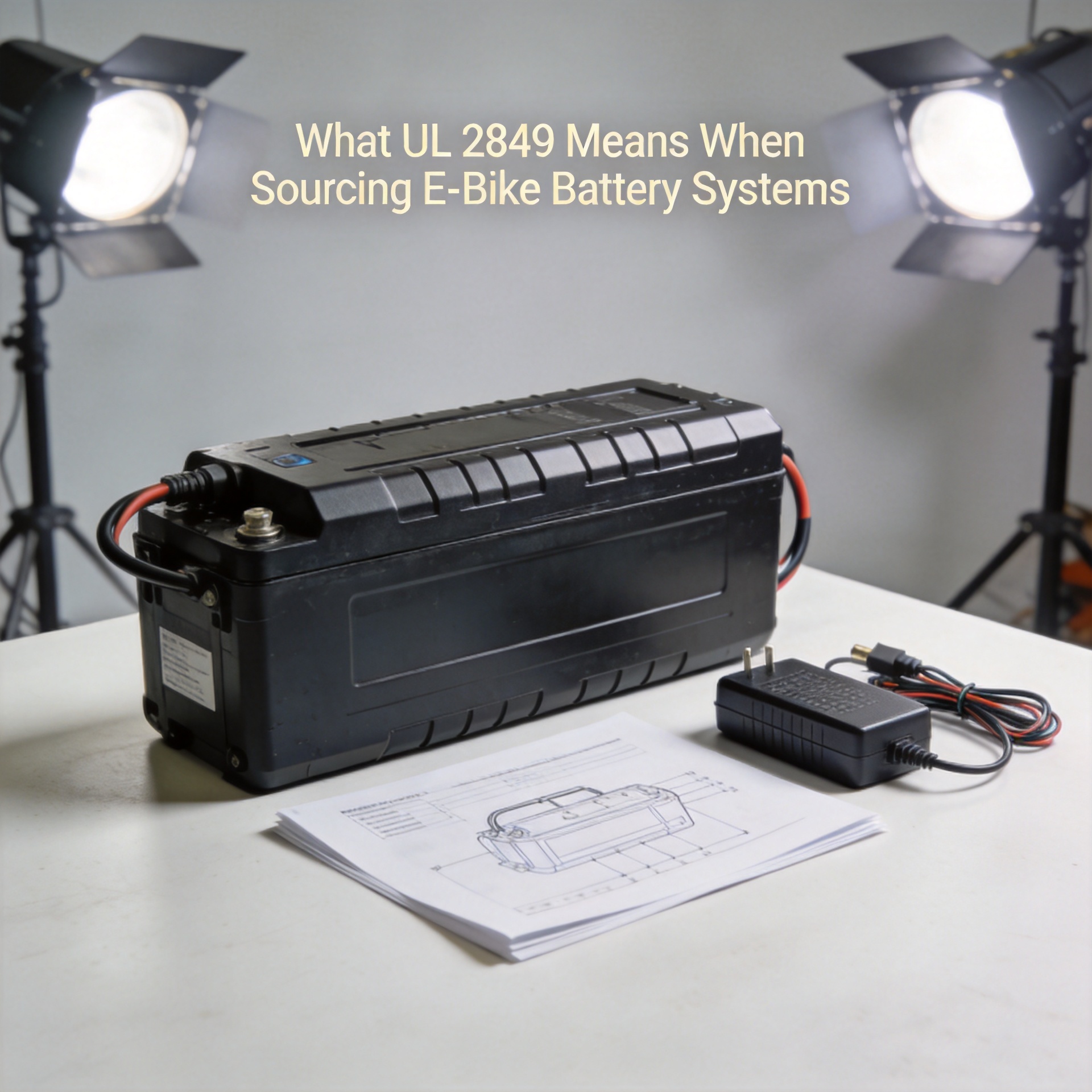
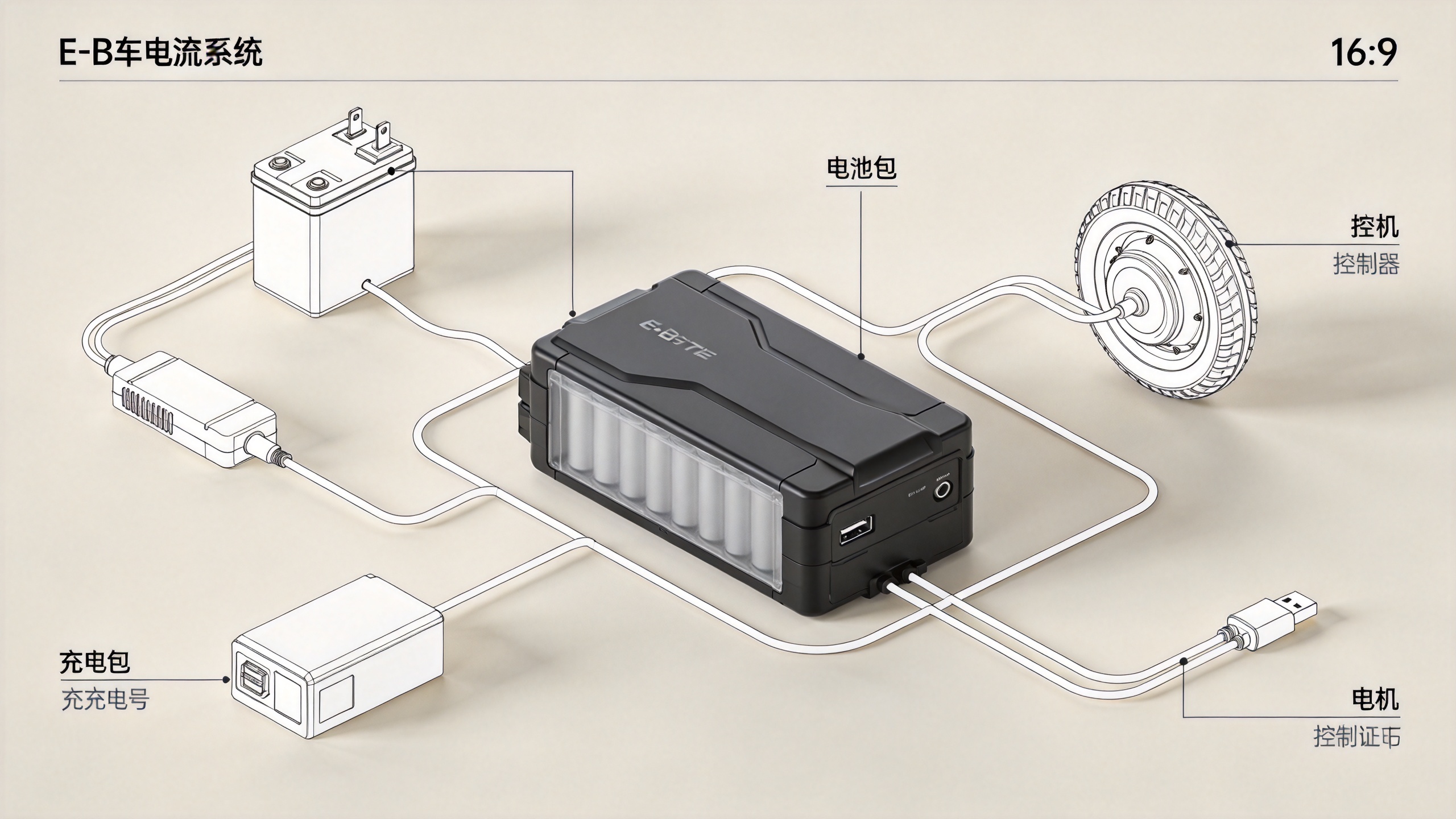
For a brand buyer, a lithium ion e bike battery is not simply a watt-hour figure, a cell brand, or a label on a carton. It sits inside an electrical system that includes the charger, wiring, controller, motor, connectors, enclosure, and the way riders actually use the bicycle. That is why UL 2849 matters in sourcing conversations. It helps frame a better question: has the relevant e-bike electrical system been evaluated as a system, and can the supplier show documentation that matches the configuration you plan to sell?
This is an awareness-level guide, not legal or certification advice. Requirements can vary by market, sales channel, vehicle configuration, and local rule. Use it to make supplier discussions more precise, then verify the applicable requirements with qualified testing, certification, and compliance professionals.
UL 2849 is a system-level question, not a battery-only claim
UL 2849 is commonly described as a standard for electrical systems for e-bikes. In broad terms, the evaluation looks at the relationship among the electrical drive train, battery system, and charging system. That distinction is important when a buyer is comparing a lithium ion e bike battery offer.
A battery pack can have its own documentation, but that does not automatically establish that every bicycle configuration using the pack has been evaluated under UL 2849. The battery may be installed with a different charger, controller, wiring layout, motor, enclosure, connector, or software setting. Those differences can matter because UL 2849 is concerned with the electrical system combination rather than a loose collection of individually described parts.
Put simply: a supplier statement about lithium batteries should lead to a configuration question. Ask which exact e-bike system the statement applies to, not merely whether a similar-looking pack appears in a catalog.
Why this distinction changes a sourcing decision
Procurement teams often begin with voltage, capacity, energy, price, and lead time. Those are useful inputs, but they do not establish system scope. A more reliable process begins by mapping the proposed production configuration: battery model and revision, BMS, charger model, controller, motor, wiring harness, connectors, enclosure, display, and any accessories that affect charging or power delivery.
One common mistake is to treat a battery listing as proof for a whole bicycle. A more careful approach is to identify what is known, what is represented by the supplier, and what still needs independent confirmation. This protects both the brand’s product team and the people who will later prepare technical files, packaging, support content, and market-facing claims.
In quality communication, it is better to request a document trail than to rely on a broad assurance. Before moving from sample approval to a production purchase order, keep a record of the model names, revision identifiers, test or certification references, issuing organization, dates, and the configuration covered. If a component changes, ask whether the existing evidence still applies.
UL 2849, a battery document, and market compliance are different checks
These three ideas are related, but they are not interchangeable:
- System evaluation: UL 2849 concerns the e-bike electrical system and the interaction of relevant components.
- Battery-focused evidence: A battery pack may be supported by documentation that addresses the pack itself. This can be useful, but buyers should not automatically extend it to the entire bicycle.
- Market compliance: A target market may have its own laws, rules, retailer requirements, transport obligations, or product-safety expectations. A standard reference alone does not replace a market-by-market compliance review.
The practical takeaway is modest but powerful: do not ask a supplier, “Is this compliant?” without defining the destination, sales model, vehicle configuration, and document you need. Ask for evidence that is specific enough to be checked.
A sourcing checklist for a lithium ion e bike battery system
Use the following sequence during RFQ, sampling, and pre-production review:
- Define the sellable configuration. Record the battery pack, charger, controller, motor, wiring, connectors, and any planned options. Avoid treating a family name as a complete technical description.
- Request scope-matched evidence. Ask what system or component each document covers, who issued it, and whether the named models and revisions match your planned configuration.
- Check the charger relationship. Confirm the supplied charger model, connector, nominal output, labeling, and use instructions. Do not assume one charger can be substituted for another without review.
- Clarify change control. Establish how the supplier will notify you when cells, BMS hardware, firmware, charger, connectors, or enclosure details change.
- Plan incoming and final inspection. Align labels, serial or batch records, manuals, warnings, packaging, and sample-approved configuration before shipment.
- Review destination requirements separately. Treat UL 2849 discussions as one part of a wider market-readiness process, especially when selling through different jurisdictions or channels.
For example, the cataloged EcoCell-360 Pro lithium-ion e-bike battery can be a useful starting point for a product conversation. The title alone, however, should not replace verification of the current configuration, applicable documentation, or the conditions attached to any stated certification claim.
Documentation matrix: make every lithium ion e bike battery claim traceable
For each lithium ion e bike battery in an RFQ, create a row that connects the commercial item to its technical evidence. The aim is not to create extra paperwork; it is to avoid a situation where a lithium ion e bike battery description, a charger document, and a completed bicycle do not describe the same configuration.
| Review item | Question for the lithium ion e bike battery supplier | Record to retain |
|---|---|---|
| Pack identity | Does this lithium ion e bike battery model and revision match the proposed unit? | Model code, revision, label image, and bill of materials reference. |
| Battery management | Which BMS is installed in the lithium ion e bike battery, and is its revision controlled? | BMS part number, firmware reference, and change notice process. |
| Charging interface | Which charger is specified for this lithium ion e bike battery configuration? | Charger model, output label, connector, and user instruction. |
| System pairing | Which controller, motor, and wiring are paired with the lithium ion e bike battery? | Approved system configuration list. |
| Evidence scope | What does the lithium ion e bike battery document cover, and what does it not cover? | Document issuer, reference, date, and stated scope. |
| Production control | How will changes to the lithium ion e bike battery or related electronics be disclosed? | Engineering-change notification and re-review procedure. |
Questions worth sending to a supplier
A short, structured request usually produces better answers than a general demand for “certificates.” Consider asking:
- Which exact bicycle system configuration is represented by the UL 2849 documentation?
- What battery, charger, controller, motor, wiring, and connector models are included in that configuration?
- Are the proposed production units identical to the documented models and revisions? If not, what changed?
- Who issued the document, what is its reference number, and how can its status be verified?
- What installation, charging, storage, and user-instruction conditions are specified?
- What is the supplier’s change-notification process for lithium batteries and connected electrical components?
- Which items remain the brand’s responsibility to verify for the intended destination market?
These questions do not presume that a supplier lacks evidence. They make the evidence usable. They also help prevent a familiar problem: a document exists, but it applies to a different battery revision or a different system combination.
Build an evidence trail instead of a marketing claim
The strongest procurement habit is to separate verified facts from items awaiting confirmation. Keep a simple file that links the purchase order configuration to product labels, manuals, component lists, supplier declarations, test or certification records, and sample inspection notes. This creates a practical review path when your team updates a listing, prepares a distributor package, or investigates a field question.
It is tempting to treat an UL reference as a final yes-or-no answer. More accurately, it is part of a disciplined conversation about system boundaries, documentation, and change control. For a lithium ion e bike battery, that discipline helps a brand move from an attractive specification sheet to a configuration that can be reviewed with fewer assumptions.
Conclusion: ask what was evaluated, and for which configuration
UL 2849 matters because e-bike electrical safety is not only a battery question. When sourcing a lithium ion e bike battery, verify the relationship among the pack, charger, drive components, wiring, and the exact product configuration you intend to market. Request scope-matched documentation, record revisions, and treat destination-market requirements as a separate check. That approach will not replace expert compliance review, but it gives your procurement team a clearer and more defensible starting point.