 EN
EN

LED Reading Lamp
Ideal for comfortable reading, energy-efficient LED design suitable for offices and homes.
2026/10/13
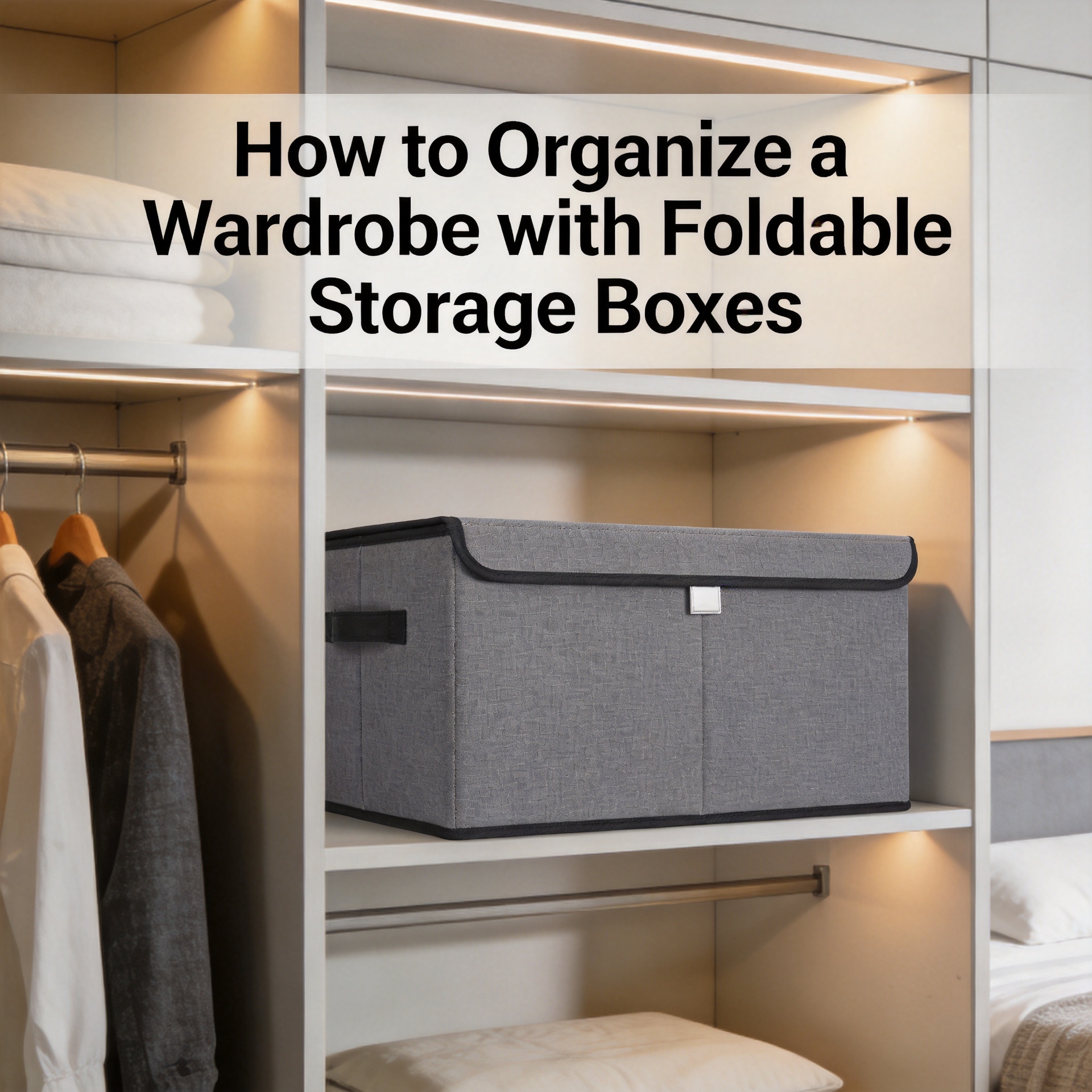
A wardrobe organiser does not need a full renovation to make daily dressing easier. Often, the useful change is to give every folded item a clear home. Foldable storage boxes are particularly practical because they can hold grouped clothing on a shelf, then collapse when the category changes or the season ends. The goal is not to fill every inch of a wardrobe; it is to make each item easy to find, return, and review.
Start by looking at the wardrobe as a working space. Which clothes are worn weekly? Which ones are seasonal? Which small items disappear into mixed stacks? Once those answers are clear, a wardrobe organiser can use boxes as simple boundaries between categories instead of relying on one large, hard-to-maintain pile.
Take folded clothing out one shelf at a time and make four temporary groups: frequent wear, seasonal wear, occasional wear, and items to repair, donate, or decide on later. This step matters because a collapsible storage box works well when it holds a category with a predictable purpose. If a box contains summer tops, gymwear, spare bedding, and random accessories together, it will not save time.
Before buying or opening boxes, measure the usable shelf width, depth, and height. Leave a little room above each box so it can be lifted out without disturbing the stack. Also note whether your wardrobe has deep shelves, shallow cubbies, drawers, or a high top shelf. A wardrobe organiser should match the space you already have, rather than creating awkward gaps.
A straightforward system uses three decisions for each category: what it is, when it is used, and how often it needs to be reached. Put everyday folded clothes where they are visible and easy to pull out. Put off-season clothing higher up, lower down, or in another storage area. Small accessories can share a box only when they are easy to separate inside it.
This approach prevents a common mistake: storing by available empty space rather than by how clothing is used. A box is not automatically the right place for every item. Hanging garments, shoes, and delicate pieces may need a different solution. The box system is strongest for foldable textiles and small categories that otherwise spread across a shelf.
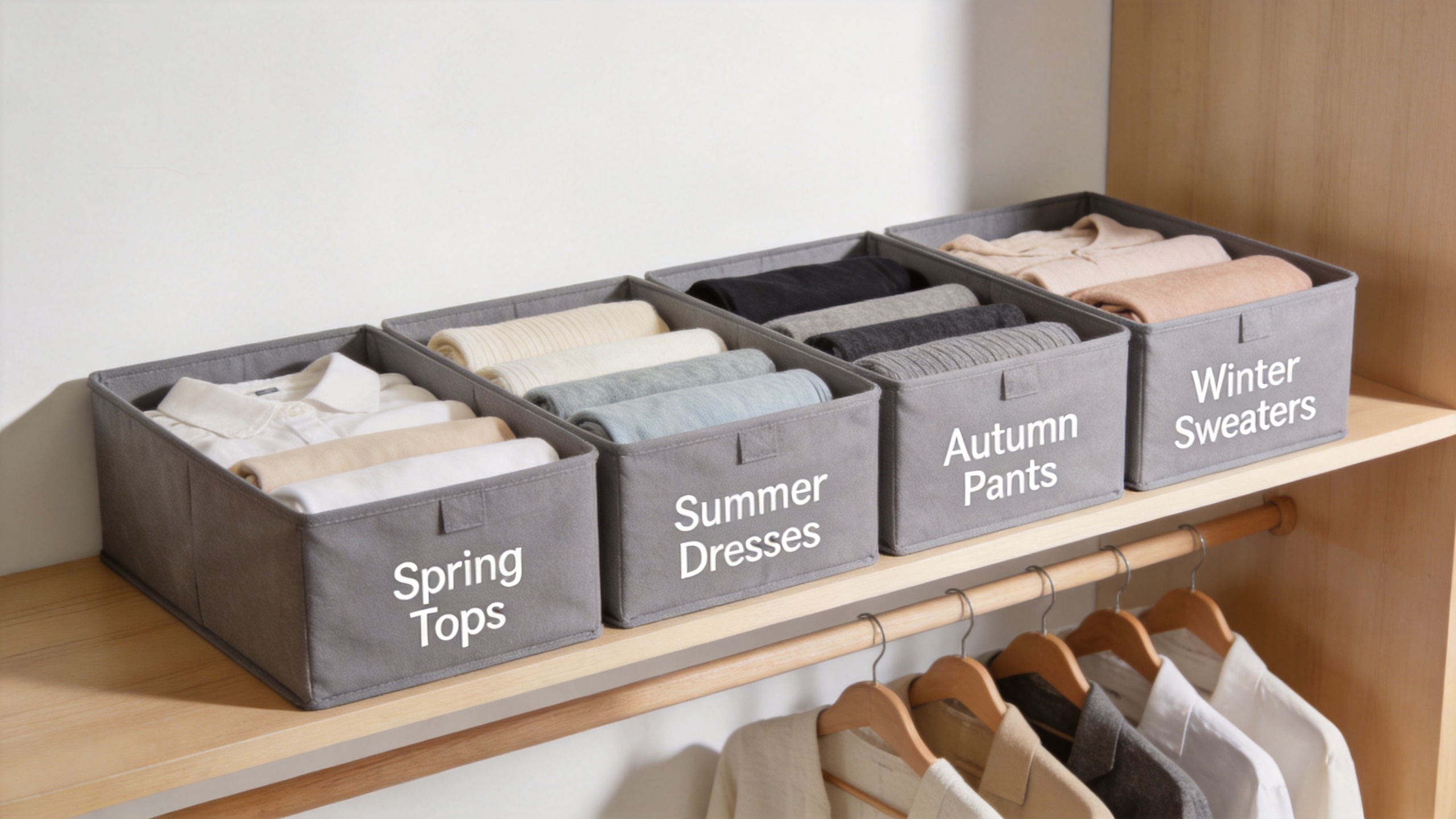
Look for a collapsible storage box with dimensions that leave enough clearance for your hands. A front window can make category checks faster, while a zip closure can help keep long-term storage contained. These features are useful only if they fit your own routine; a sealed box may be less convenient for clothes you reach for every morning.
For a shelf-based wardrobe organiser, try to keep boxes aligned in one row rather than stacking several deep layers. You should be able to remove one box, take what you need, and return it without rebuilding the shelf. The Foldable Clothing Storage Box With Zipper Closure and Window is an example of a box format to consider when you want a contained, visible category; check the product dimensions against your wardrobe before choosing a placement.
Use one folding method within each box so the contents remain readable. For example, place T-shirts upright in rows, roll lightweight workout clothes, or fold thicker knits flat in short stacks. There is no single correct folding technique. What matters is that you can see what is inside without unpacking the whole box.
Give each box a simple label based on the action it supports: “workout tops,” “winter scarves,” “spare pillowcases,” or “travel basics.” Avoid vague labels such as “miscellaneous” or “other.” If several people use the wardrobe, a label should be clear enough that anyone can return an item to the right place. A window-front collapsible storage box may reduce the need for detailed labels, but a short label still helps when similar fabrics look alike.
Vertical space can improve a wardrobe organiser, but only if it does not turn frequently used clothes into a climbing task. Reserve eye-level and waist-level shelves for daily categories. Use higher shelves for seasonal boxes and lower areas for heavier or less-used items. If a box must be stacked, place the least-used category on top and keep the stack low enough to handle safely.
Deep shelves can create a second row for seasonal items, but make the front row intentional. You might place current-season basics in front and a labelled collapsible storage box with backstock behind it. Revisit that arrangement when the season changes rather than letting the hidden row become permanent clutter.
A practical wardrobe organiser is one you can maintain in a few minutes. At the end of a laundry cycle, return folded clothes directly to their labelled category. Once a month, check whether a box has become overfilled or mixed. At the beginning of a new season, swap the location of seasonal boxes instead of reorganising the entire wardrobe from scratch.
In practice, the right wardrobe organiser is less about owning more containers and more about creating repeatable homes for the clothes you already wear. Begin with one shelf and a few well-defined categories. Once the routine works there, extend it to the rest of the wardrobe.
Use only enough boxes to separate categories you genuinely need to find and return. Start with a few boxes for everyday basics, seasonal clothing, or accessories, then add more only if a category remains difficult to manage.
They can be useful for clean, dry, folded seasonal clothing when the box suits the location and the garments are checked periodically. For delicate, hanging, or moisture-sensitive items, use a storage method appropriate to the fabric and conditions.
Avoid forcing bulky items into a box that cannot close or fit on the shelf. Frequently worn hanging garments, shoes, and pieces that need special care may be better kept in dedicated wardrobe organisers designed for those categories.
2026/10/13
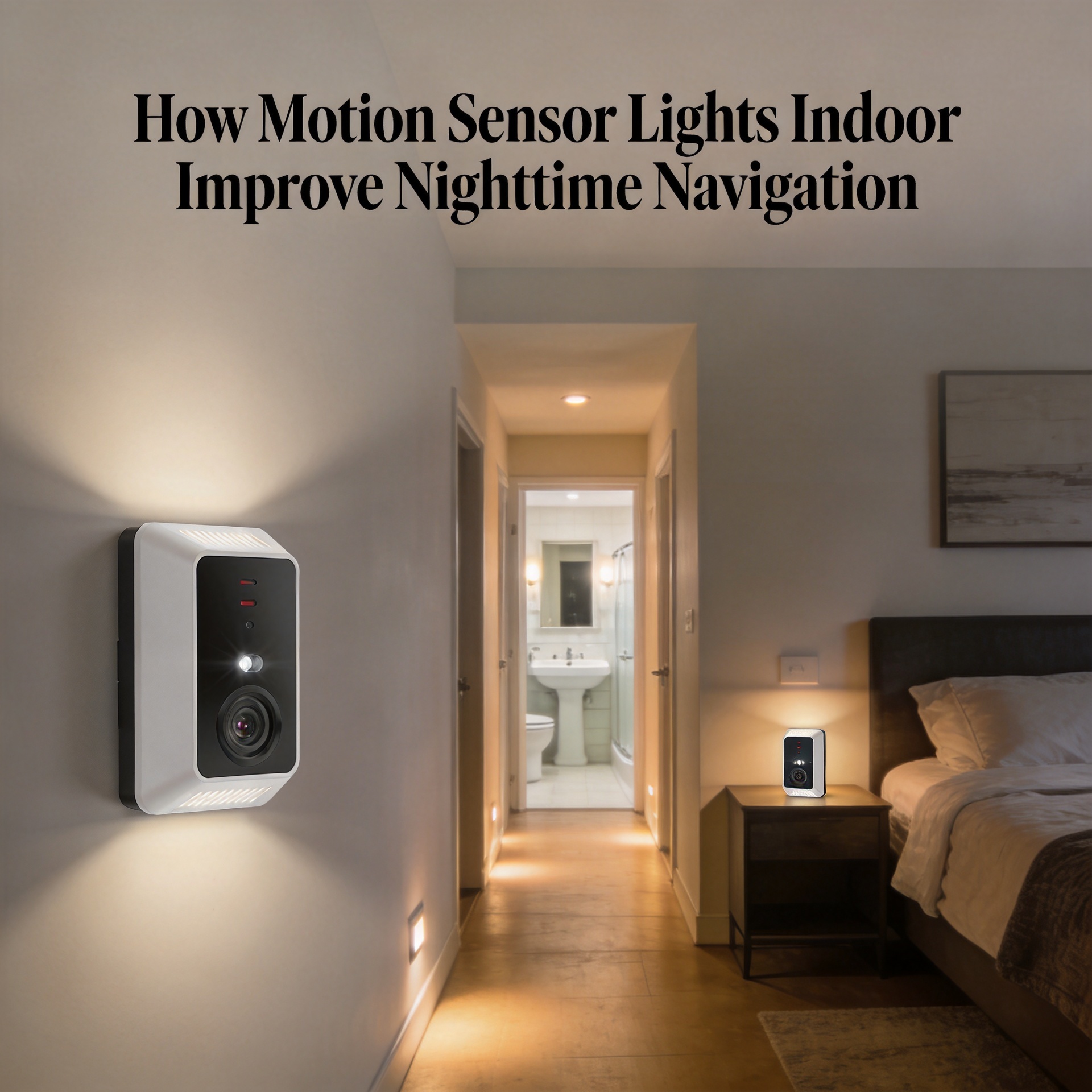
Learn how a motion sensor light indoor can support clearer nighttime routes in hallways, stairs, and bathrooms.
2026/10/13
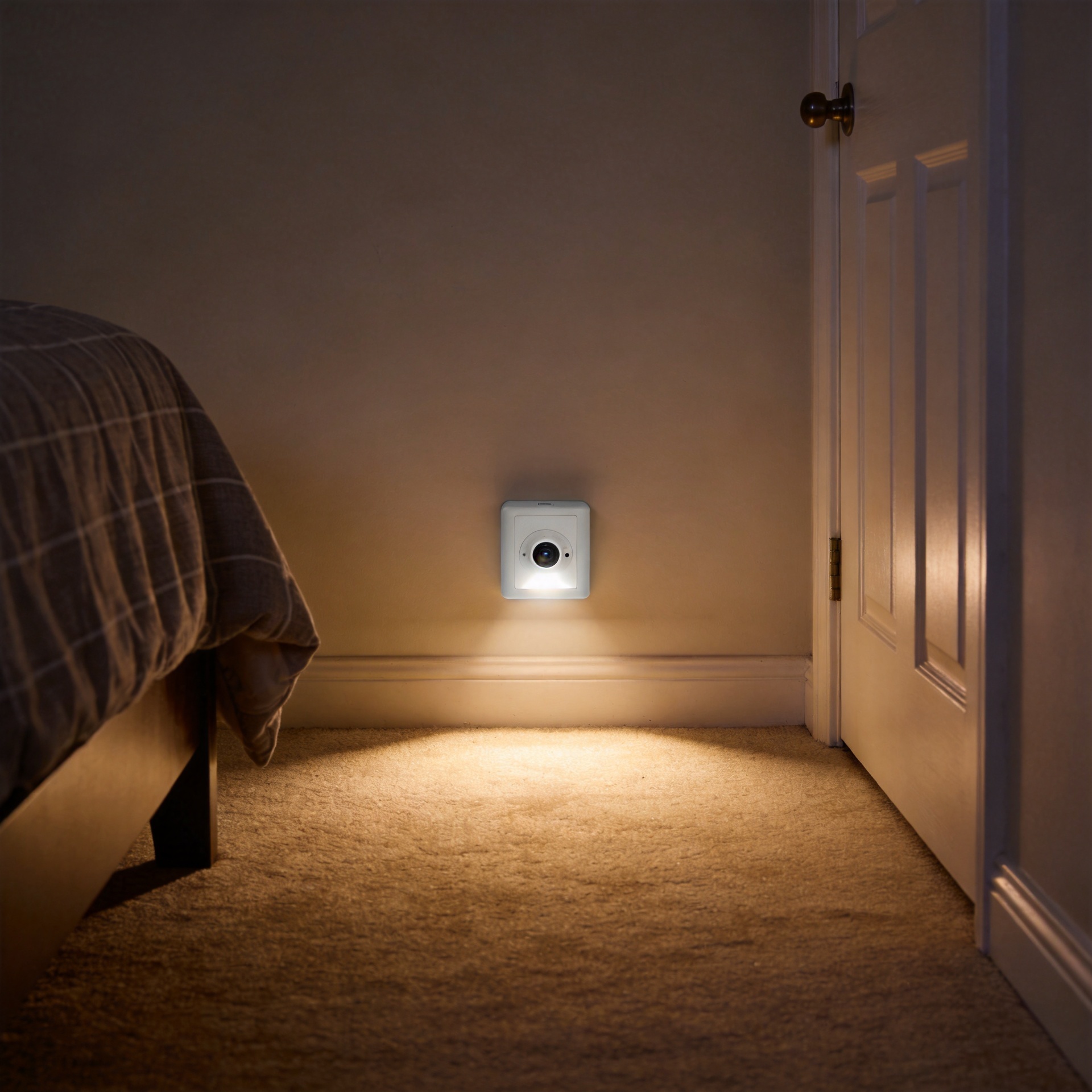
Find the best places for a motion sensor light indoor, from bedrooms and hallways to bathroom entrances, with glare and sensor tips.
2026/10/13
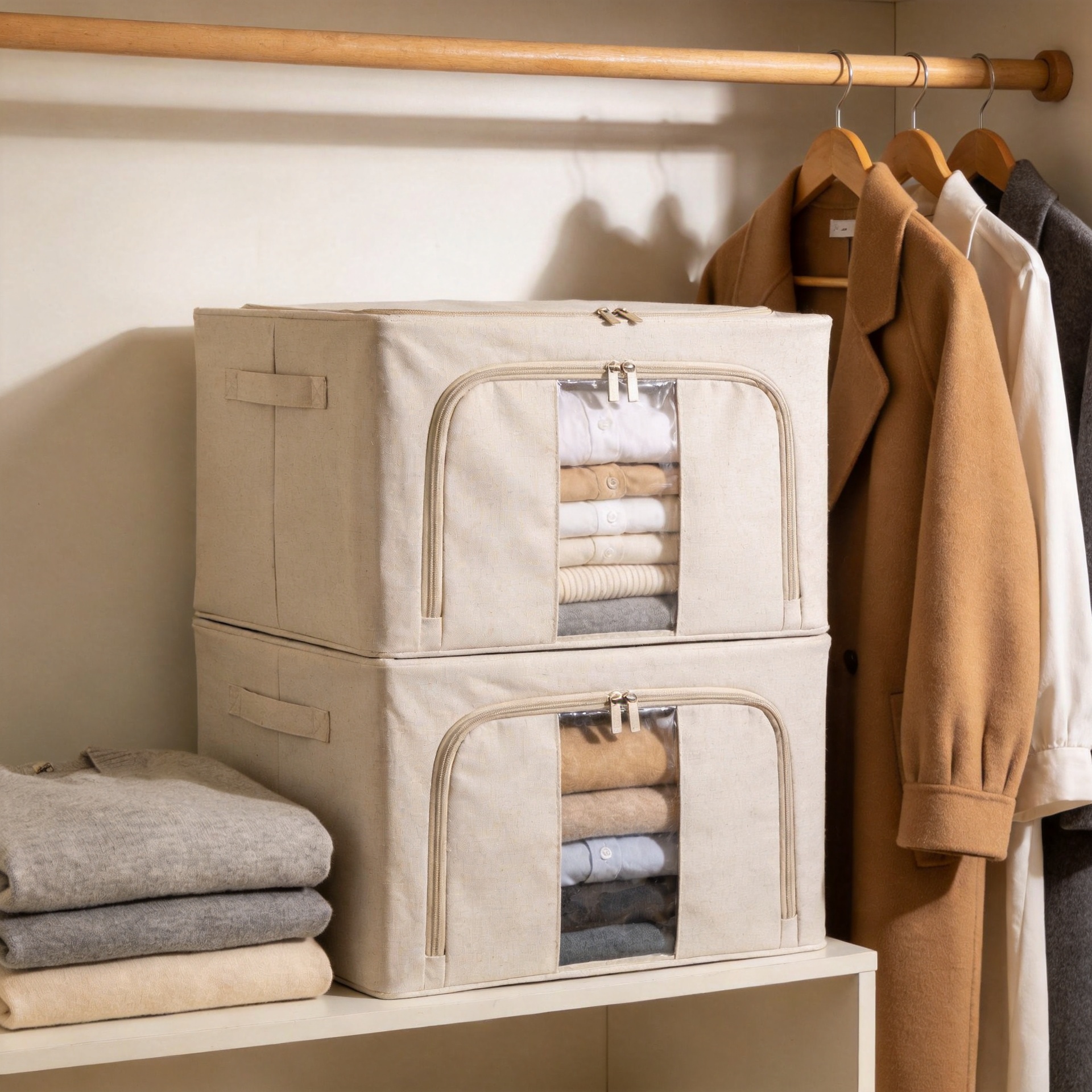
Discover how cloth storage bins simplify seasonal clothing organization, save space, and make wardrobe rotations easier.
2026/10/13
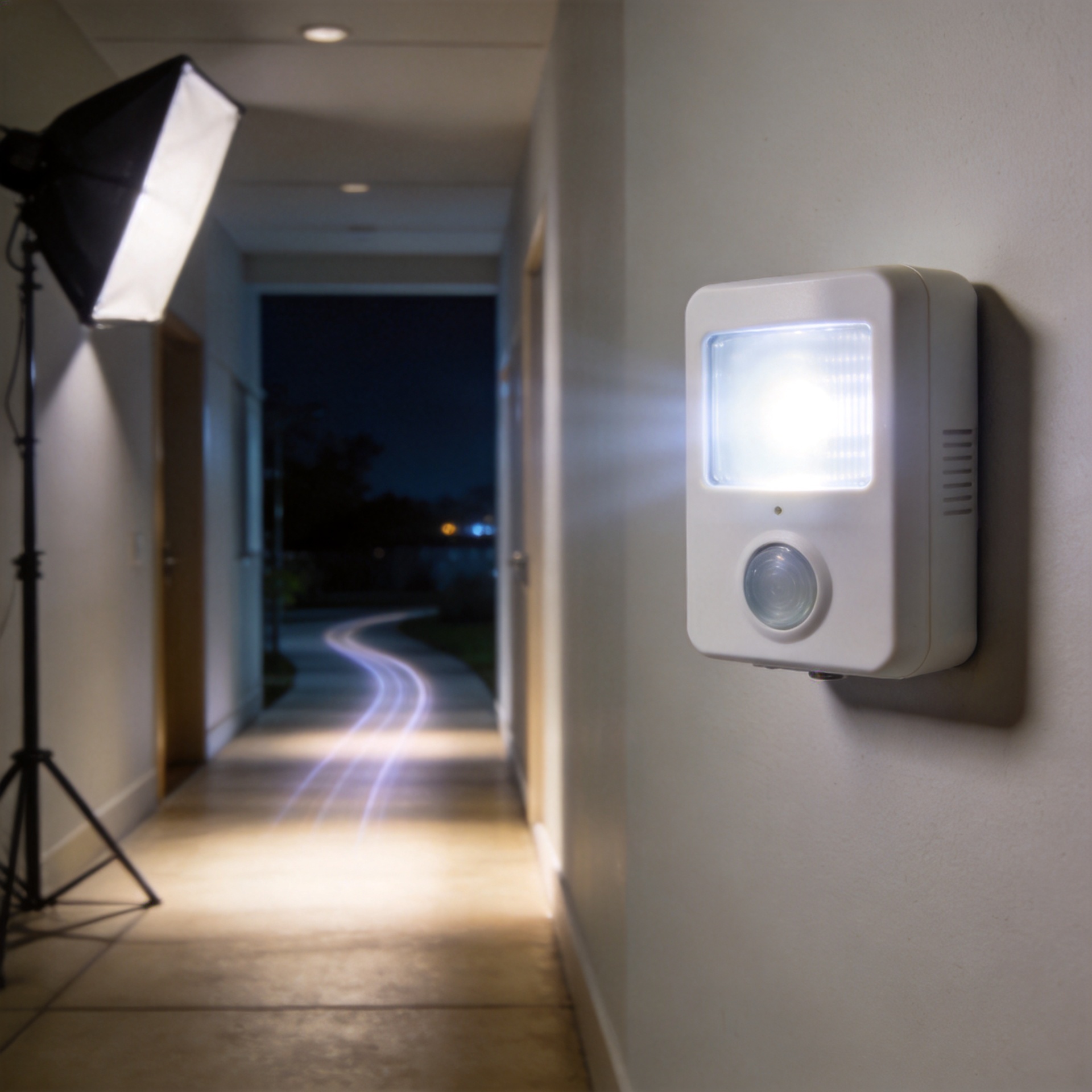
Learn how motion sensor nightlights use PIR detection, a night day sensor, and a timer for automatic nighttime guidance.

2026/10/12
Covers human-centric lighting, IoT integration, retrofit economics, and sustainability mandates driving adoption.

Ideal for comfortable reading, energy-efficient LED design suitable for offices and homes.

Smart adjustable lighting for study spaces, long-lasting LED with optimal brightness control.

Provides gentle illumination at night, portable LED design suitable for bedrooms and corridors.

High-performance LED bulbs for every application, reliable, efficient, and eco-friendly lighting.

Connect with our reseller network for bulk LED products and customized procurement solutions.

Expert advice, installation guidance, and after-sales service for all LED lighting projects.
