EN
EN

How to Estimate E-Bike Range from 36V Battery Capacity and Watt-Hours
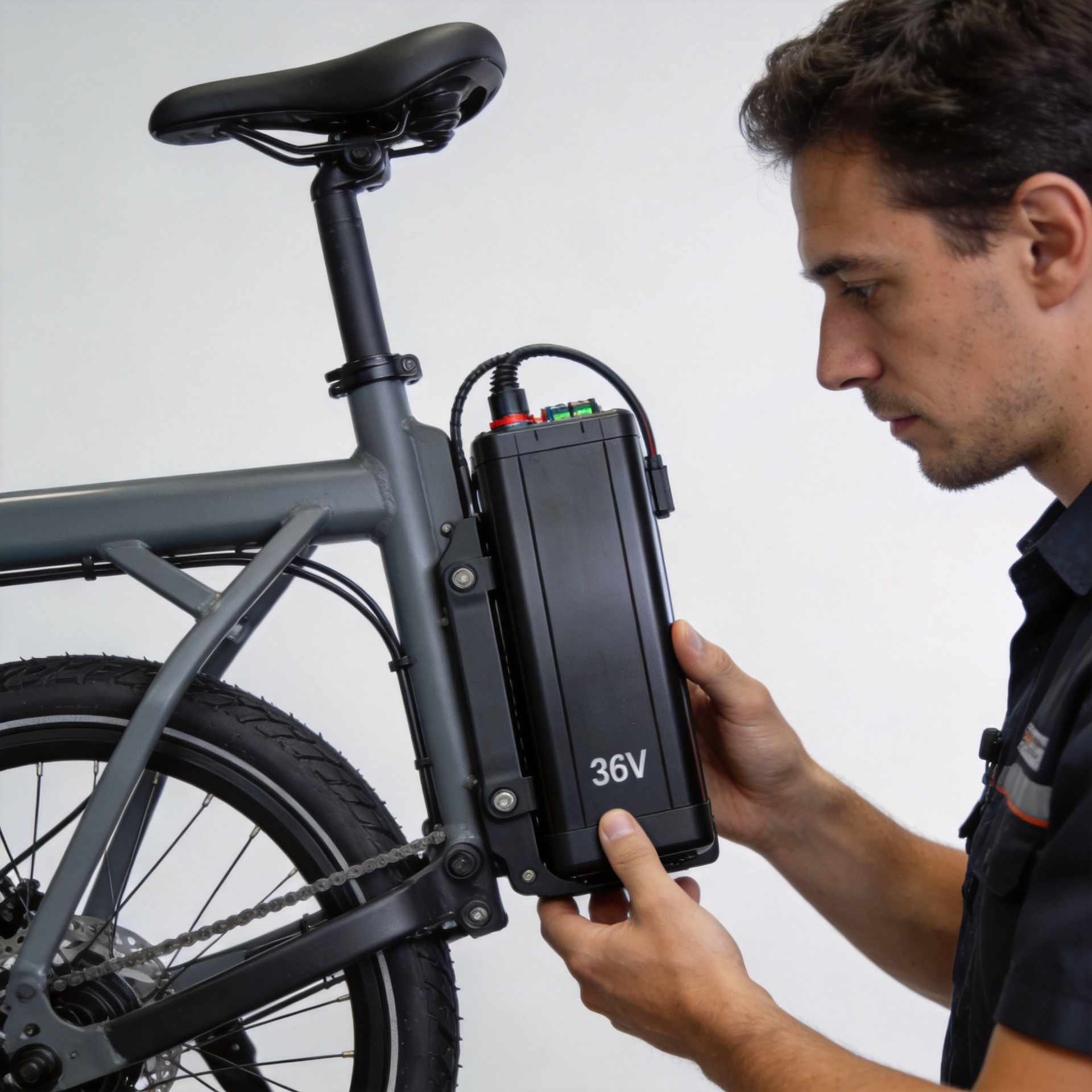
A 36V label tells you the nominal voltage of an e-bike battery. It does not, by itself, tell you how far the bike will travel. To estimate range, convert voltage and amp-hours into watt-hours, then compare that stored energy with the energy the bike is likely to use per mile or kilometre. For brand teams and buyers planning an e bike 36v specification, this is a more useful conversation than quoting one headline range number.
The calculation is straightforward, but the result should be an interval rather than a promise. Assist level, terrain, speed, rider and cargo weight, tyres, wind, temperature, and battery condition all change real-world consumption. Start with the energy figure, then make the assumptions visible.
Start with the difference between 36V, Ah, and Wh
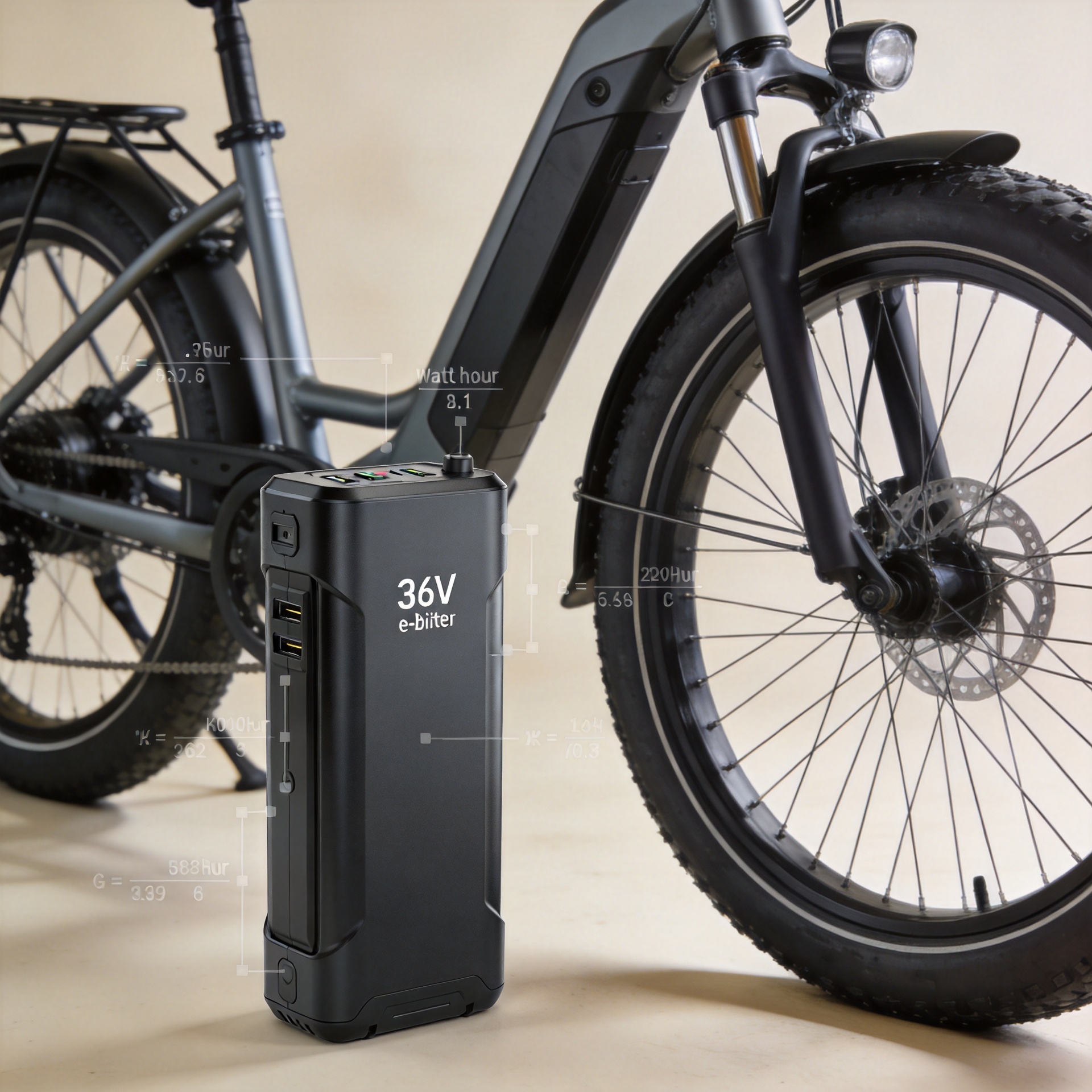
Voltage (V) describes the battery system’s nominal electrical potential. Amp-hours (Ah) describe charge capacity. Watt-hours (Wh) combine the two into an energy figure that is much more useful for estimating range:
Watt-hours (Wh) = nominal voltage (V) × capacity (Ah)
For example, a 36V 10Ah battery has an estimated nominal energy capacity of 360Wh. A 36V 15Ah battery has about 540Wh. Both are 36V systems, but the 36V 15Ah pack stores roughly 50% more nominal energy, so it can support a longer ride under comparable conditions.
This also explains why a 36V 10Ah electric bike battery and a 36V 15Ah pack should not be presented as interchangeable simply because the voltage matches. Voltage is one compatibility checkpoint; usable energy is the range checkpoint. Before comparing packs, buyers should also verify connector, controller, mounting format, charging profile, and physical dimensions with the bike’s existing system.
Convert watt-hours into an estimated range
Once you have Wh, use an expected energy-consumption rate:
Estimated range = battery Wh ÷ expected Wh per mile
For a first planning estimate, use a range of consumption assumptions rather than a single fixed number:
| Ride condition | Planning consumption | What usually drives it |
|---|---|---|
| Gentle urban riding | 12–18 Wh/mile | Flat roads, lower assist, steady pedalling, modest speed |
| Typical mixed riding | 18–25 Wh/mile | Stops, moderate assist, varied surfaces, normal load |
| Demanding riding | 25–35+ Wh/mile | High assist, hills, headwinds, heavy load, frequent acceleration |
These bands are planning tools, not certified range ratings. They help a team explain the conditions behind a claim and decide whether a battery configuration fits the intended use case.
Worked examples for a 36V 10Ah and a 36V 15Ah battery
Example 1: 36V 10Ah
36V × 10Ah = 360Wh. At 18Wh per mile, the simple estimate is 360 ÷ 18 = 20 miles. At 25Wh per mile, it becomes about 14 miles. A sensible expectation is therefore a range band of roughly 14–20 miles before allowing for a conservative reserve and the factors that affect an individual route.
Example 2: 36V 15Ah
36V × 15Ah = 540Wh. At 18Wh per mile, the estimate is 30 miles; at 25Wh per mile, it is about 22 miles. Under the same assumptions, a 36V 15Ah battery gives a practical planning band of about 22–30 miles.
For metric planning, divide Wh by Wh per kilometre instead. If a route is expected to use 12Wh/km, a 540Wh pack gives 45km in the simple calculation. The method is unchanged: compare energy stored with energy consumed.
Use the battery’s stated Wh when it is available
If a specification already lists watt-hours, use that number first. It avoids rounding differences from nominal voltage and simplifies comparison. For instance, the EcoCell-360 Pro Lithium-Ion Ebike Battery, 36V 10.4Ah, 374Wh, Samsung 21700 Cells, IP67, UL 2849 Certified is listed at 36V, 10.4Ah, and 374Wh. The formula gives 36 × 10.4 = 374.4Wh, which aligns closely with the stated 374Wh.
Using 374Wh, the range estimate is about 21 miles at 18Wh per mile and about 15 miles at 25Wh per mile. That is a transparent way to communicate an e bike 36v range expectation without implying that every rider will achieve the same result.
Why real range changes from one ride to the next
The motor does not consume a fixed number of watt-hours every mile. Higher pedal-assist settings ask the battery to provide more energy. Hill climbs and repeated acceleration draw more energy than level cruising. A heavy rider or cargo load, soft tyres, low temperatures, strong headwinds, and an aging battery can all move the outcome toward the demanding end of the planning range.
There is also a useful self-correction to make: motor wattage is not the same as continuous energy use. A 250W or 350W motor rating describes power capability, while range depends on how long and how hard that power is used. A rider who pedals steadily in a lower assist mode may consume far less energy per mile than the motor’s maximum power rating might suggest.
A buyer checklist for communicating 36V battery range
- State the nominal voltage and Ah, then show the resulting Wh.
- Give a range interval with the Wh-per-mile assumption behind it.
- Describe route and assist conditions instead of leading with an unconditional maximum range.
- Keep voltage compatibility separate from energy-capacity comparison.
- Confirm the connector, controller voltage, charger requirements, case dimensions, and mounting arrangement before replacement or specification approval.
- For product pages and sales material, label the estimate as typical or planning guidance unless it is backed by a defined test method.
Make the calculation useful, not overly precise
For an e bike 36v battery, begin with Wh: multiply 36V by the Ah rating, or use the stated Wh figure. Divide that energy by a realistic consumption range for the intended riding conditions. A 36V 10Ah pack is about 360Wh, while a 36V 15Ah pack is about 540Wh; the latter holds more energy and will usually support a longer range when the bike and route are comparable.
The most credible range communication is simple and conditional: show the calculation, show the riding assumptions, and leave room for real conditions. That makes it easier for a brand team to compare battery options, explain expectations to riders, and verify system compatibility before moving to samples or production specifications.